Carpentaria warns disaster funding changes could put emergency fodder response at risk
Carpentaria Shire Council is warning proposed changes to Australia’s Disaster Recovery Funding Arrangements (DRFA) could make large-scale emergency responses such as coordinated fodder drops harder to fund in future disasters.
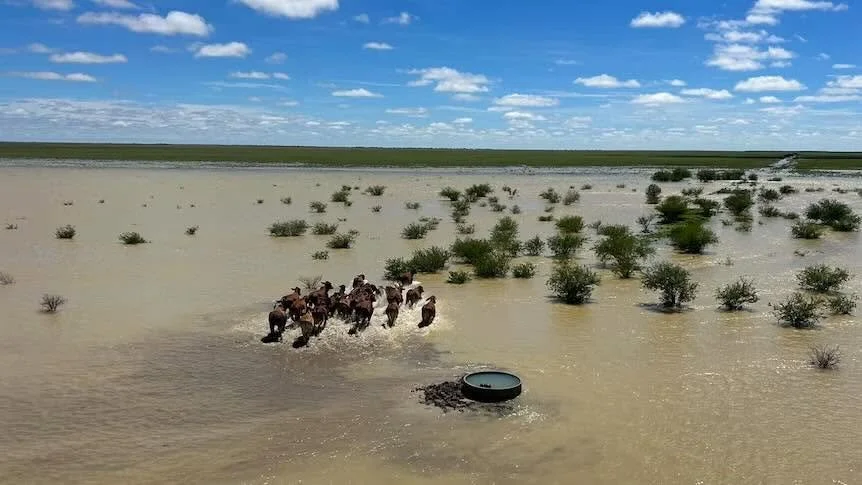
During major North West Queensland flooding earlier this year, the Australian and Queensland Governments jointly funded an initial $2 million emergency fodder support package, including Carpentaria Shire, followed by a $12 million Coordinated Emergency Fodder Support Package across 10 flood-affected council areas. The assistance supports extraordinary costs associated with getting emergency fodder to isolated livestock.
“It leaves councils and our communities questioning the Commonwealth’s commitment to the industry and communities that contribute so much and get less and less in return.” - Mayor Jack Bawden
Helicopter operations, aviation fuel, transport and fodder distribution can come at significant cost, but during prolonged flooding there may be no other practical way to reach stranded cattle and protect livestock welfare.
Carpentaria Shire Mayor Jack Bawden said these were the types of extraordinary circumstances disaster funding arrangements needed to accommodate.
“Disasters don’t arrive with a fixed scope or a fixed price tag. When you have properties isolated and cattle stranded by floodwater, the response has to be based on what needs to happen on the ground,” Mayor Bawden said.
“Fodder drops can involve helicopters, fuel, transport and a huge logistical effort across an enormous area. That is not something an individual producer or a small remote council can simply absorb.
“The current arrangements give governments the ability to respond at the scale required. We need to be very careful about changing a system in a way that could limit that flexibility when the next major event hits.”
The proposed Disaster Recovery Funding Framework does not provide any certainty as to whether Counter Disaster Operations would continue to support these activities, and instead questions its use during disaster response activities.
Mayor Bawden said the proposed changes also came after the Commonwealth Government rejected Queensland’s request for a restocking, replanting and on-farm infrastructure grant program following the 2025-26 North West Queensland floods.
“For our producers, emergency fodder keeps livestock alive during the flood. Restocking support helps businesses recover when the water is gone. Both are about keeping viable cattle businesses operating after a major disaster,” Mayor Bawden said.
“We are talking about an industry that supports communities like ours and makes a major contribution to the Queensland and Australian economies.
“It leaves councils and our communities questioning the Commonwealth’s commitment to the industry and communities that contribute so much and get less and less in return.”
“If governments are serious about strengthening Northern Australia and protecting Australia’s food production and supply chains, flexible support for producers through major natural disasters has to be part of that commitment.”
The Australian Government’s Northern Australia Action Plan identifies the cattle industry as the largest economic land use across Northern Australia, while its developing Feeding Australia: A National Food Security Strategy has identified resilient food production and supply chains as a national priority.
NWQROC is calling on the Federal Government to reconsider the proposed Disaster Recovery Funding Framework and retain disaster funding arrangements capable of responding flexibly and at scale to severe and catastrophic events across remote Australia.
Download NWQROC’s full submission to NEMA as part of the national consultation process.
Contact:
Josh Dyke - CEO, NWQROC
josh.dyke@nwqroc.com.au | 0473 795 066