North West Queensland council funding and fiscal sustainability in focus at Townsville hearing
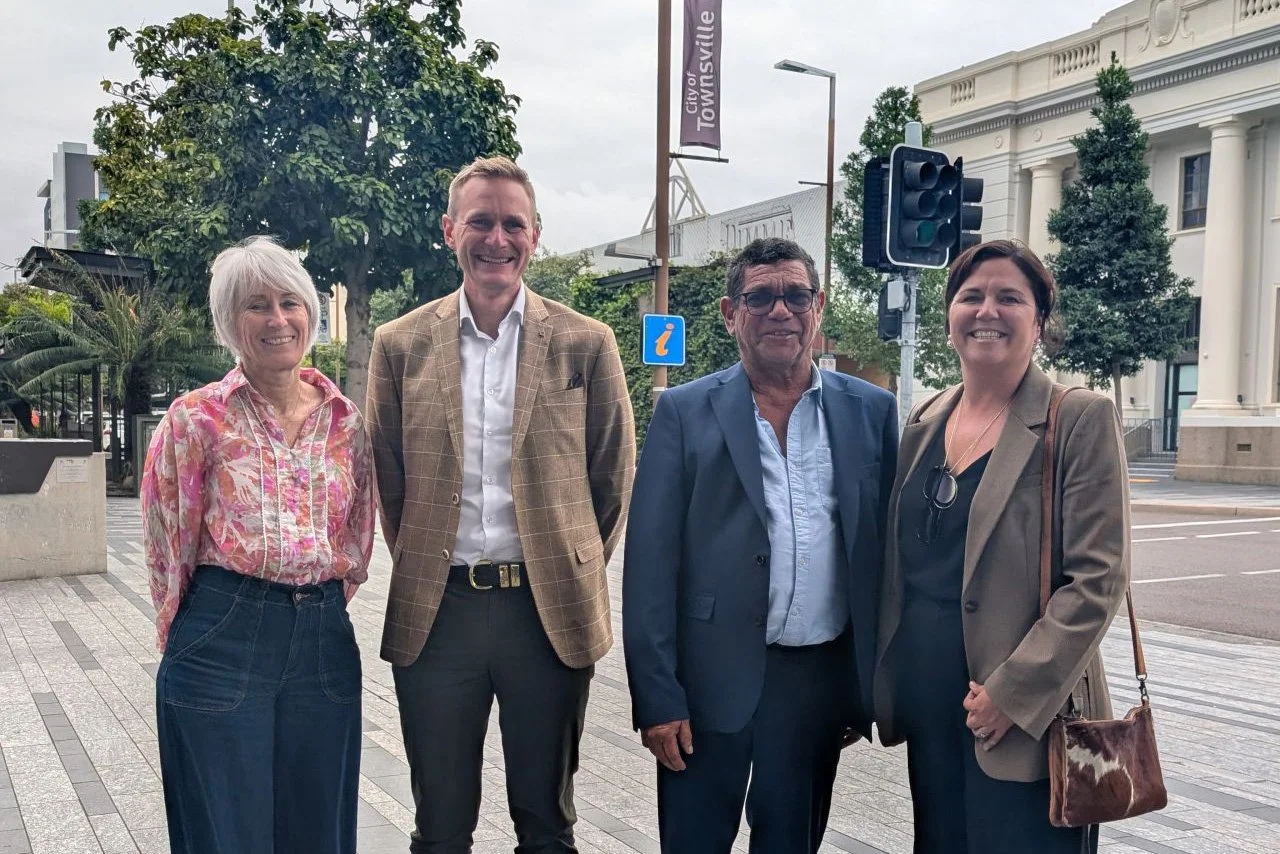
Pictured above outside the hearing (L-R), Mayor Fegan, Josh Dyke, Mayor Sewter and Mayor Peddle.
Representatives from the North West Queensland Regional Organisation of Councils spoke at the Inquiry into Local Government Funding and Fiscal Sustainability held in Townsville today.
The hearing discussions provided an important platform for our region’s leaders to highlight the structural challenges facing councils across North West Queensland - one of Queensland’s most remote, geographically vast and economically significant regions.
First up on the day’s agenda, the NWQROC representatives included Mayor Janene Fegan, McKinlay Shire Council Mayor Kate Peddle, Flinders Shire Council, Mayor Richard Sewter, Mornington Shire Council, and NWQROC Executive Officer Josh Dyke.
The message from NWQROC was clear: without meaningful reform, councils in North West Queensland will continue to face declining capacity to maintain infrastructure and deliver the services that make their communities liveable.
Our councils continue to deliver essential services and infrastructure across enormous distances, with limited revenue-raising capacity and increasing community expectations.
Yet current funding frameworks do not adequately reflect the realities of distance, scale, workforce constraints, service delivery obligations and the critical role local governments play in sustaining liveable communities across regional and remote Queensland.
Key issues raised by the NWQROC delegation included:
Reliance on external funding
North West Queensland councils rely on external funding for 48.6% of annual operating revenue, compared with 11.4% for the rest of Queensland.
Limited own-source revenue
The region’s limited rate base contributes just 18.8% of total operating revenue, significantly constraining councils’ financial flexibility.
A growing infrastructure challenge
Asset replacement costs in North West Queensland sit at $133,535 per capita, compared with $21,645 for the rest of Queensland — creating an infrastructure burden that exceeds councils’ capacity to fund alone.
Increasing cost shifting
Councils are increasingly expected to deliver services that private providers and other levels of government are withdrawing from, including childcare, public health services and airport operations.
Mayor Richard Sewter also highlighted the additional financial disadvantages faced by Aboriginal Shire Councils in North West Queensland, including 100% reliance on State and Federal Government funding and regulatory barriers that limit opportunities to undertake commercial activities that could support long-term financial sustainability.
NWQROC looks forward to continuing to work constructively with the Inquiry and all levels of government to advocate for funding frameworks that better reflect the realities of remote local government.
Read the Western Queensland Alliance of Councils submission, prepared in partnership by the North West Queensland Regional Organisation of Councils, CWQ Remote Area Planning and Development Board, and the South West Queensland Regional Organisation of Councils.